Domestic & commercial
Septic tank emptying across Leicestershire
Emptied on a schedule that suits how yours is used. Garden left exactly as we found it.

What is a septic tank?
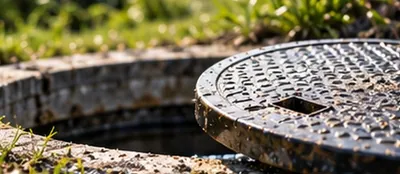
A septic tank only works when the solids that settle in it are removed before they build up. Waste water from the house flows into the tank, the solids sink to the bottom as sludge, and the liquid on top drains away through a soakaway or drainage field. Left too long, the sludge layer rises, solids get carried into the soakaway and the whole system starts to fail. Regular emptying is what stops that happening.
Septic tanks are common wherever there are no mains drains: farmhouses, cottages, holiday lets, barn conversions and rural businesses across Leicestershire. If your property has one, emptying it is your responsibility as the owner or occupier.
Not sure whether you have a septic tank or a cesspit? A septic tank has an outlet and drains to the ground, so it needs emptying as a minimum about once a year. A cesspit is sealed and holds everything, so it needs emptying far more often.
One rule worth knowing: in England a septic tank is not allowed to discharge straight into a ditch, stream or other watercourse. If yours does, the Environment Agency's general binding rules say it must be replaced with a small sewage treatment plant, connected to the mains sewer or changed to drain to a soakaway. If we think that applies to yours, we will tell you.
How often should a septic tank be emptied?
For most households, once a year is about right. A large family, a holiday let or a tank that is on the small side for the property may need it more often. A tank that is only used at weekends may go longer.
The honest answer is that every tank is different. On the first visit we look at how full it is, how it is running and how it is used, and agree an interval with you. From then on we keep track of the date, so you never have to think about it.
The longer a tank is left, the thicker the sludge gets, and thicker sludge costs more to dispose of. Regular emptying is the cheaper way to run a tank.
What happens on the day
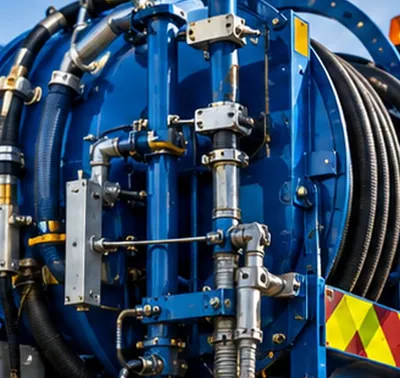
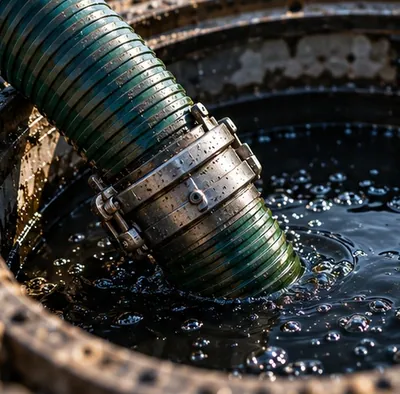
We arrive in the window we agreed, connect to the tank, and pump out the settled sludge and liquid. We check the tank as we go and tell you if we spot anything that needs attention, such as a damaged baffle or signs the soakaway is struggling.
Before we leave you get a waste transfer note. It is a legal document, so keep it with your records: if you are ever asked to show your tank is being maintained, that is your proof. The waste itself goes to a licensed treatment site.
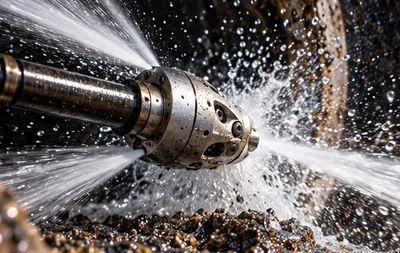
Slow drains between visits can point to a problem in the pipework or drainage field. A CCTV drain survey can help identify the cause, while high pressure jetting can clear blockages in the pipes. Tell us what's happening and we'll advise on the next step.
Access and hoses
The tanker carries long hoses, so it does not need to reach the tank itself. If your tank is down a lane, across a lawn or behind the house, tell us when you book and we will plan the visit around it.
The hose on the tanker reaches 60 metres, so let us know if your tank is further than that from where we can park.
Signs your tank needs emptying
- Slow drains or gurgling from toilets and sinks
- A smell near the tank or the soakaway
- Wet, lush or boggy patches of grass over the drainage field
- Sewage backing up into the house
Where we do this
Leicester, Loughborough, Hinckley, Market Harborough, Melton Mowbray, Lutterworth, Coalville, Oadby and Wigston, plus the villages between them and regular commercial work across the Midlands. See every area we cover, or call with your postcode.
Good to know
Questions we get asked.
How much does septic tank emptying cost?
Three things set the price: the size of the tank, how easy it is to reach, and how far we travel. We give you a clear price before we book the visit, and it is the price you pay. Call 0116 200 1752 for a quote.
Do I need to be home?
Not usually, as long as we can get to the tank and you have told us where it is. Many customers leave a gate unlocked and we message when we are done.
Do you empty the whole tank?
Yes. Removing only part of the contents leaves the sludge that causes the problems. We pump the tank out fully and let it refill naturally.
What happens to the toilet when a septic tank is full?
Toilets flush slowly or gurgle, sinks and showers drain badly, and in the worst case sewage backs up into the lowest drain in the house. If you see any of that, stop running water where you can and call us; a same-day empty usually clears it.
Are you licensed?
Yes. D & M Tankers Ltd is a registered waste carrier, licence CB-DU104692, and all waste goes to licensed disposal sites.
Related
Also on the truck




Free, no obligation quote
Book septic tank emptying
across Leicestershire.
Call for a straight answer and a fair price. If you're not sure what your tank needs, that's exactly the kind of call we're good at.
0116 200 1752or email info@septictankemptying.co.uk
Request a quote